Cursor Rules Best Practices (.cursor/rules Guide)
Cursor rules are the difference between an agent that flails through your tree and one that ships with discipline. Done well, .cursor/rules becomes permanent muscle memory for every chat.
This guide covers how rules should work — and why the highest-ROI move is buying a maintained pack instead of pasting half-finished tips forever.
Where Cursor rules live
Project rules usually live under:
.cursor/rules/
Cursor can load rules every turn or when they’re relevant. The details matter less than this: whatever is always on is a tax and a lever. Soft essays cost tokens. Strict limits save them.
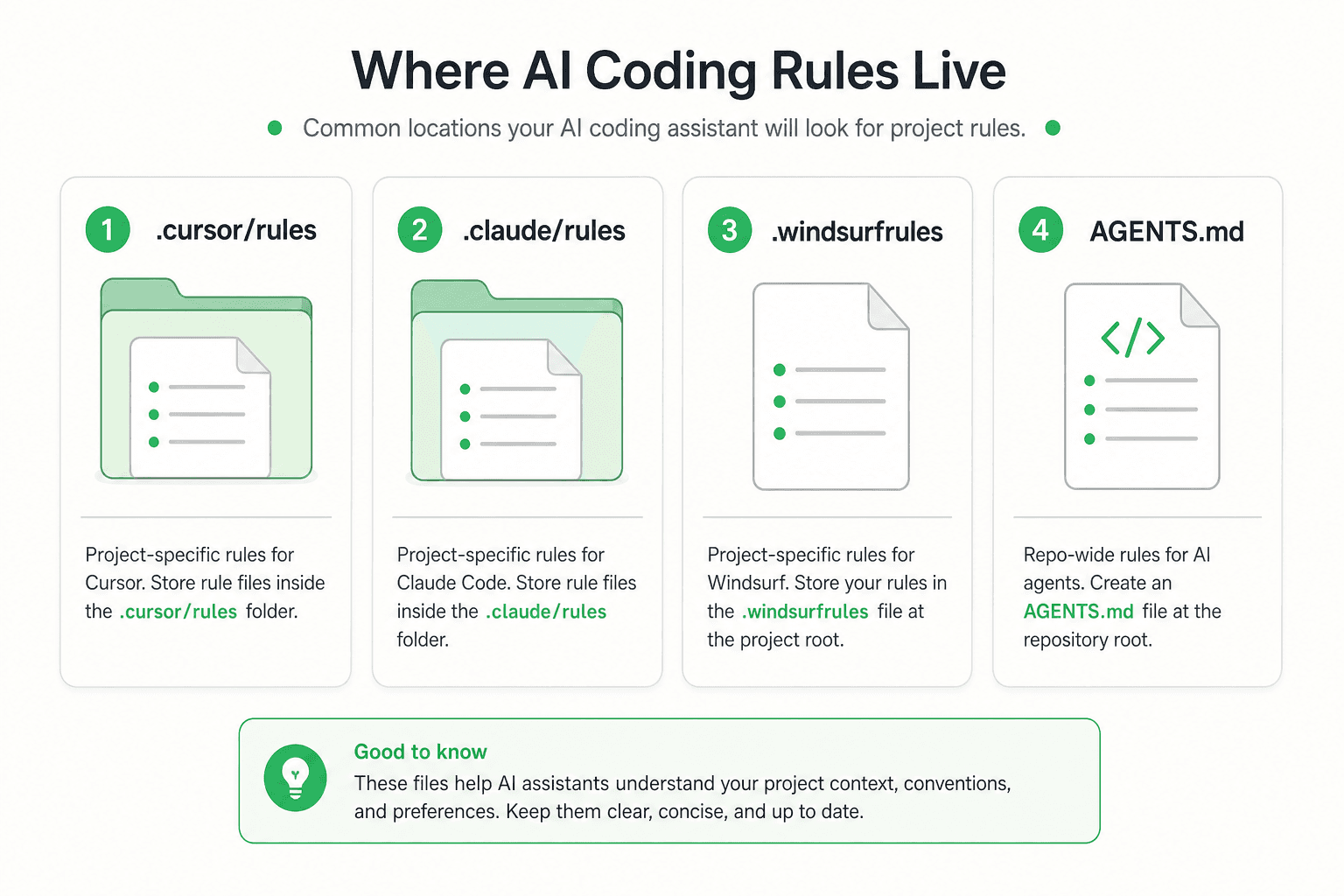 Where AI coding rules live across tools
What good Cursor rules do
Strong rules constrain behavior:
- Stop unbounded repo browsing
- Keep tasks focused
- Prefer the smallest useful context
- Point at a verify step
Weak rules do the opposite:
- Multi-page style guides the model re-quotes every turn
- “Be thorough” fighting “be concise”
- Duplicating the entire README into always-on text
Always-on vs occasional rules
| Type | Best for | Risk |
|---|---|---|
| Always on | Cost limits, safety, verify command | Token tax if too long |
| Triggered / occasional | Domain niches, rare APIs | May not attach when needed |
| Manual paste each chat | Experiments | Easy to forget |
If you paste the same speech into every chat, it belongs in rules — but it should be a productized pack, not a novel you wrote at midnight.
Why most Cursor rules never stick
- They’re written once and never updated from real failures
- They’re too polite to stop expensive behavior
- Every teammate has a different version
- Switching IDEs means starting over
- Nobody wants to maintain rules as a second job
That’s the gap Token Kits fills.
Buy the pack instead of reinventing it
Token Kits is lifetime access to a battle-tested always-on pack for Cursor (and other IDEs):
- Built to cut agent token spend roughly in half
- Dense, strict, maintained
- Install path shown after checkout
- Same product across Cursor, Windsurf, Claude Code, Copilot, and more
Prelaunch $39 for the first 100 users, then $79 — one-time.
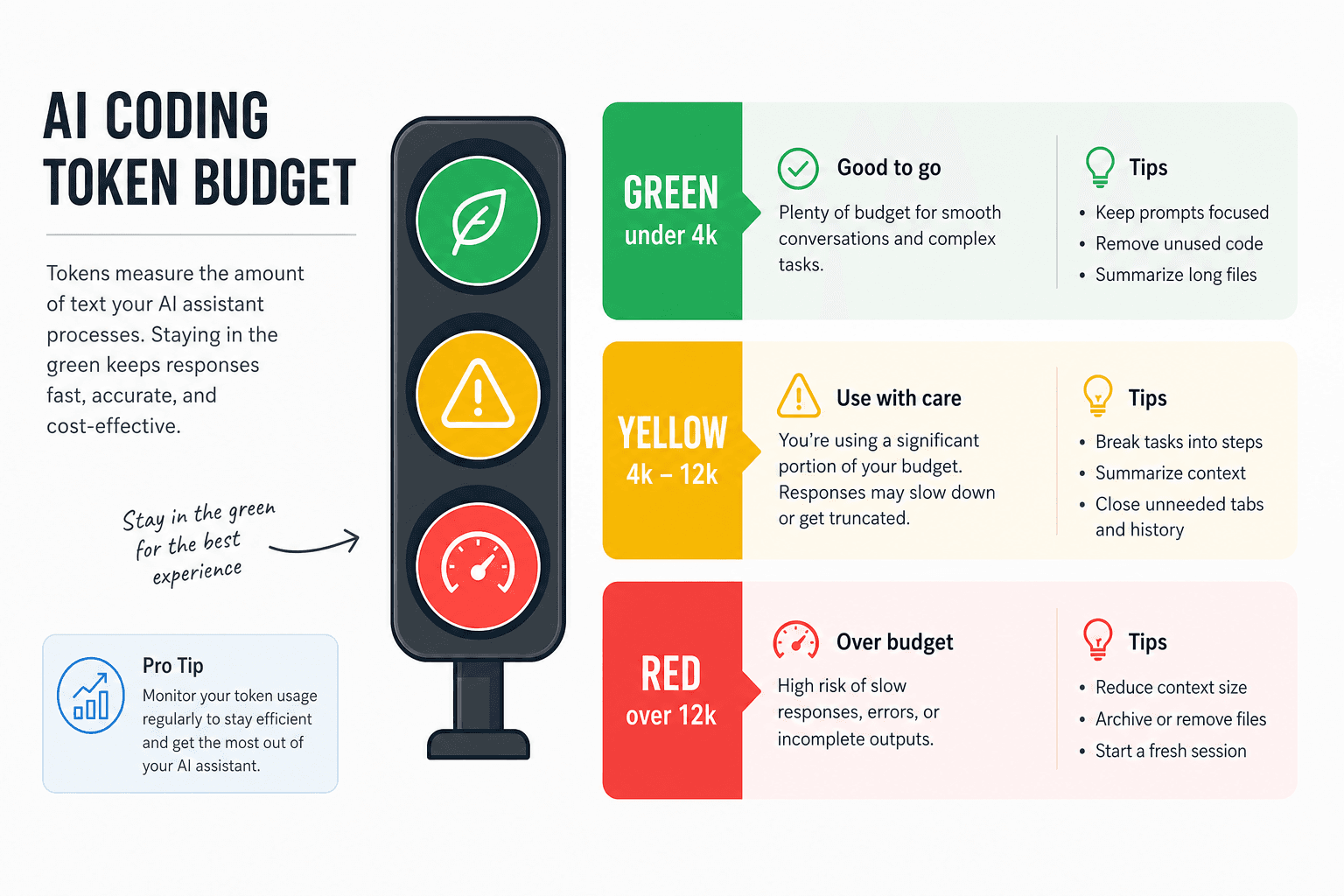 Token budget concept for coding agents
What to keep in your own rules (safely)
It’s fine to keep your project truths in repo rules:
- How to run tests in this app
- Public APIs you must not break
- Stack notes unique to the product
Leave the token-saving engine to Token Kits. That’s the part teams keep rewriting poorly — and the part we maintain.
Checklist
- Always-on rules are short and non-negotiable
- Niche guidance is separate from cost control
- Teammates inherit the same pack
- You bought Token Kits instead of forking a DIY essay
- Install happens from your post-purchase instructions
FAQ
Do Cursor rules work in every mode?
They’re most valuable in agent flows that load project instructions. Put the critical limits in a maintained pack so you’re covered when it counts.
Should rules replace README?
No. README is for humans. Rules are operating constraints for agents.
Can I just copy tips from blog posts?
High-level habits help. The actual Token Kits pack is sold separately — these articles won’t unpack it for free. Buy lifetime access to get the real file and install steps.
Bottom line
Cursor rules are leverage. Don’t spend months hand-tuning a weak version.
Buy Token Kits and put a battle-tested pack on every chat.
Related: Reduce Cursor AI costs · What is AGENTS.md?